

Welcome to 2026! Here’s what we’ve been working on.
We skipped our January update; too many features were in flight and we wanted to ship them properly before writing about them. So this is a combined January/February edition!
We’re starting off with new observability features in the UI, Add-On backups, and a small update to our Tailscale integration.
We’ve redesigned the metrics graphs in the UI for both apps and services. CPU, memory, and network usage are now easier to read at a glance.
For database services, we added database size (which directly correlates to your selected plan’s storage), table statistics, connection counts and transaction counts.
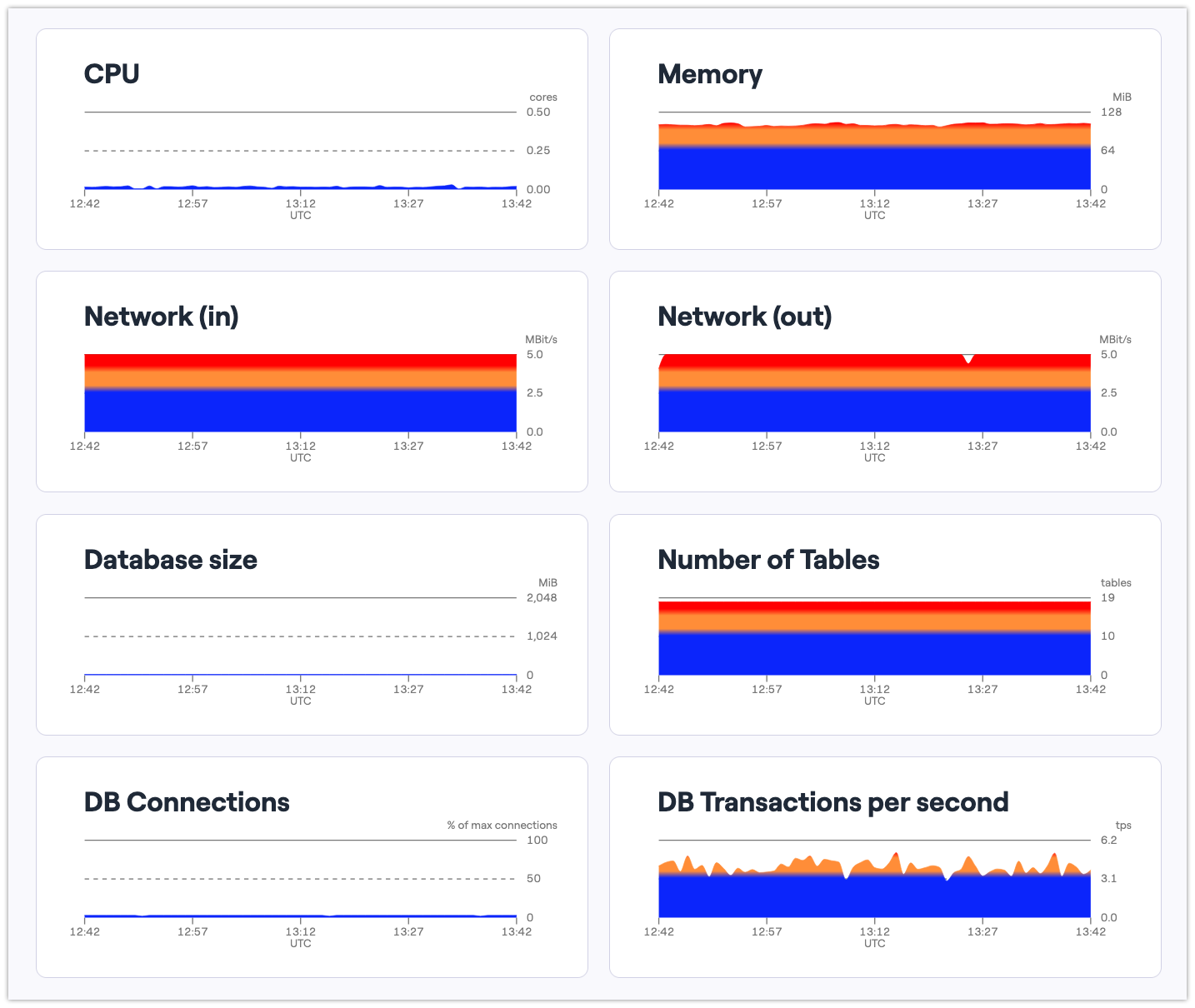
Our approach: guidance, not hard limits. Instead of cutting you off when you hit a threshold, we show you the parameters that matter—so you can make informed decisions about scaling up or down.
During Q1/2026, we’ll publish documentation and improve the graphs further with supported usage patterns in mind to help you get the most out of your resources.
Add-Ons on Runway follow the same pricing tiers as apps. Starting from the Scale plan, you get high-availability features (like read replicas) and managed backups.
See the Add-On pricing page for full details.
On Scale plans and higher, Runway automatically creates daily backups and retains them for 2 weeks. You can list all backups for a service:
runway service backup ls db-mydb
Need a backup right now? Create one manually:
runway service backup create db-mydb
All backups (automated or manual) can be downloaded:
runway service backup download db-mydb backup-name
The download is a snappy-compressed tarball containing the PostgreSQL configuration and data directory—perfect for local development or migrating to another service.
Create a new service from an existing backup:
runway service create db-mynewdb \
    --plan=dev-launch \
    --service=db-mydb
The source service must have backups enabled (Scale plan or higher), but the new service can be on any plan. By default, the new service inherits the configuration from the source.
Common use cases:
We’ve updated our Tailscale integration with documentation on how to connect Add-Ons to your tailnet.
Once your service is on the tailnet, you get direct access to your database—no tunnels or port forwarding required. This opens up workflows that weren’t possible before:
Check out the Tailscale guide to get started.
That’s it for January/February 2026. We’d love for you to try these features out—backups, Tailscale access, the new metrics—and let us know what you think.
And if you’re still on Heroku and wondering what’s next after Salesforce’s latest announcements: Runway runs your apps, has managed PostgreSQL with backups, and is hosted in the EU (not on AWS!). Maybe it’s time to take a look.